

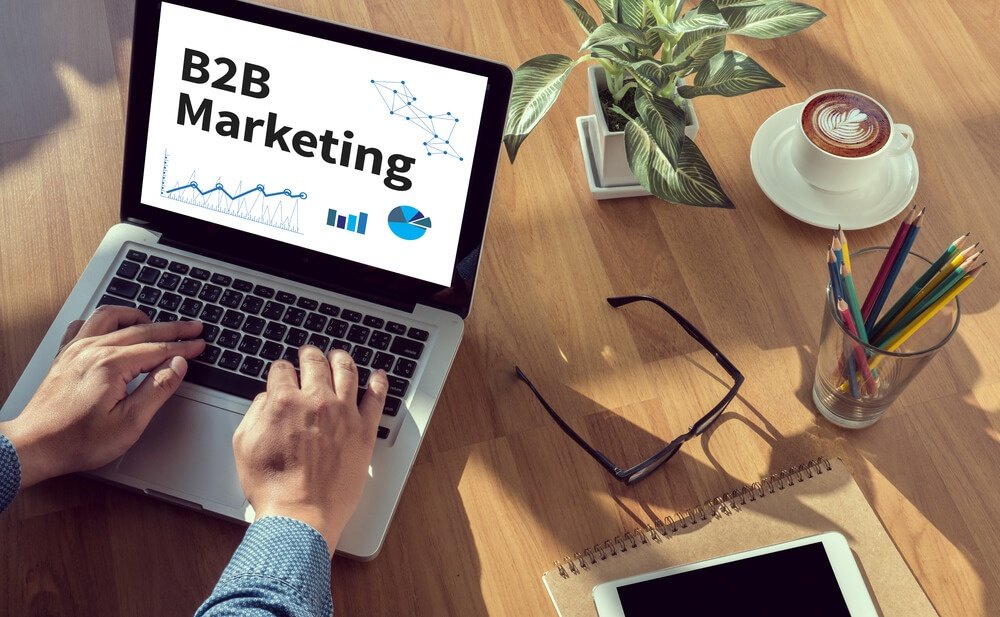
B2B marketing is the process of helping a business reach, educate, qualify, convert, and retain organizational buyers. Unlike many consumer purchases, a B2B decision can involve several people with different priorities, a longer evaluation period, technical or security reviews, procurement requirements, and a meaningful implementation cost.
A useful B2B marketing strategy therefore does more than generate leads. It helps the right accounts understand a problem, evaluate options, build an internal business case, and move toward a confident buying decision. The strongest programs connect marketing activity to pipeline and revenue while giving sales useful context about the people and accounts showing buying intent.
What Is B2B Marketing?
B2B marketing covers the strategies, channels, content, campaigns, and measurement systems used to sell products or services from one organization to another. The offer might be software, professional services, industrial equipment, consulting, technology implementation, or another business solution.
The objective is not simply to reach as many people as possible. It is to reach relevant decision-makers and influencers, create useful demand, and make the buying process easier.
B2B Marketing vs. B2C Marketing
| Area | B2B | B2C |
|---|---|---|
| Buyer group | Often multiple stakeholders or a buying committee | Often an individual or household |
| Decision factors | Business value, risk, integration, security, compliance, implementation, total cost | Value, convenience, price, brand, experience, preference |
| Sales cycle | Can be extended and involve several stages | Often shorter, although high-consideration purchases can take longer |
| Content needs | Education, proof, comparisons, technical detail, business cases | Product information, reviews, demonstrations, offers and reassurance |
| Primary commercial metrics | Pipeline, opportunities, revenue, win rate, acquisition cost, retention | Revenue, conversion rate, average order value, acquisition cost, repeat purchase |
The distinction is not absolute. A B2B buyer is still a person, and B2B campaigns should be clear, useful, and easy to engage with. The difference is mainly the buying context and the complexity of the decision.
How the B2B Buying Process Works
A practical B2B journey can be viewed as a sequence of questions rather than a rigid funnel:
- Problem recognition: What is not working, and why does it matter?
- Research: What approaches, technologies, or vendors could solve it?
- Evaluation: Which options fit the organization’s requirements?
- Internal validation: Can the buyer justify the investment to finance, leadership, IT, procurement, or other stakeholders?
- Decision: Which supplier and commercial terms are acceptable?
- Implementation and adoption: Can the solution deliver the expected outcome?
- Expansion or renewal: Should the customer continue, expand, or replace the solution?
Marketing should support these questions instead of treating every visitor as a generic lead.
Core B2B Marketing Channels
1. SEO and Content Marketing
Search can capture demand when buyers are researching problems, solutions, vendors, technologies, pricing, integrations, or implementation approaches. Useful B2B content should answer the actual decision behind the query rather than repeating a keyword.
Strong formats include problem-solving guides, comparison pages, implementation checklists, buyer guides, original research, case studies, product documentation, calculators, and expert analysis. For a deeper look at search strategy, see our guide to B2B vs. B2C SEO.
2. LinkedIn and Professional Social Channels
Professional social platforms can support thought leadership, executive visibility, employee advocacy, event promotion, and account-focused campaigns. The useful question is not how many followers a brand has, but whether the content reaches relevant people and creates meaningful engagement or commercial conversations.
3. Email and Lifecycle Nurturing
Email is most useful when it reflects where an account or contact is in the buying process. Segment by meaningful differences such as role, industry, product interest, customer status, or demonstrated intent. Avoid treating a large email list as an automatic indicator of marketing quality.
4. Events, Webinars, and Demonstrations
Events can shorten the distance between a buyer and an expert. Webinars, workshops, product demonstrations, conferences, and executive briefings can work particularly well for products that require education before purchase. Connect registration, attendance, engagement, and follow-up to the CRM so the commercial impact can be evaluated.
5. Account-Based Marketing
Account-based marketing focuses marketing and sales resources on selected accounts that fit the organization’s ideal customer profile. Effective ABM requires more than uploading a target-account list. Teams need a reason for selecting the accounts, relevant messaging, coordinated outreach, and a way to measure account engagement and progression.
6. Partnerships and Referral Programs
Technology partners, consultants, associations, distributors, and existing customers can introduce a business to relevant audiences. Partner marketing works best when responsibilities, lead ownership, attribution, and the value offered to the partner are clear.
How to Build a B2B Marketing Strategy
1. Define the ideal customer profile
Identify the characteristics that make an account a strong fit: industry, size, geography, technology environment, business model, growth stage, regulatory context, or a specific operational problem. Separate the ideal account from the individual buyer personas within that account.
2. Map the buying committee
Identify who uses the solution, who influences the decision, who controls the budget, who evaluates technical or security requirements, and who can block the purchase. Different stakeholders may need different evidence.
3. Identify the problems worth solving
Talk to customers, sales teams, support teams, and subject-matter experts. Review sales objections, lost-deal reasons, support questions, search demand, and competitor positioning. These sources often reveal better content opportunities than a keyword list alone.
4. Map content to decisions
Create content that helps buyers move from problem definition to evaluation and decision. For example, an educational guide may attract early researchers, while a comparison, implementation guide, case study, or ROI model can help a qualified buyer make a decision.
5. Choose channels based on buyer behavior
Do not select channels because they are fashionable or because competitors use them. Match the channel to the audience, buying stage, economics, creative requirements, and ability to measure outcomes.
6. Align marketing and sales
Define what counts as a qualified lead, when sales should engage, what information marketing should pass to sales, and how rejected leads return to nurturing. A shared definition of pipeline stages is more valuable than a high volume of loosely qualified contacts.
7. Build measurement before scaling
Decide how campaigns will be attributed before increasing spend. Use consistent campaign naming, CRM fields, analytics, conversion tracking, and closed-loop reporting where possible. Attribution will never be perfect, but a consistent measurement model is far more useful than isolated channel metrics.
B2B Marketing Metrics That Matter
Use metrics that match the commercial objective and buying stage. Useful measures include:
- Reach and qualified traffic: Are relevant people finding the business?
- Engagement: Are target accounts consuming or interacting with useful content?
- Lead quality: Do contacts match the ICP and show a relevant need?
- Opportunity creation: Are marketing-influenced or marketing-sourced opportunities increasing?
- Pipeline: How much qualified pipeline can be associated with marketing activity?
- Win rate: How often do qualified opportunities become customers?
- Customer acquisition cost: What does it cost to acquire customers through the program?
- Revenue and retention: Does marketing contribute to durable commercial value, not only initial acquisition?
Do not force every channel to produce a direct sale. Early-stage content may influence future demand, while a high-intent campaign may be judged more directly on opportunities and revenue.
Common B2B Marketing Mistakes
- Optimizing for lead volume instead of fit: More form fills do not necessarily mean more revenue.
- Writing for keywords instead of buyers: Search visibility is useful only when the resulting audience is relevant.
- Using the same message for every stakeholder: A CFO, technical evaluator, end user, and executive sponsor may need different evidence.
- Stopping at lead generation: Marketing should help sales progress opportunities and should learn from closed and lost deals.
- Over-relying on vanity metrics: Followers, impressions, and traffic can be useful diagnostics but should not replace commercial measures.
- Publishing without expert input: Generic content is easy to produce and easy for competitors to copy. Subject-matter expertise, original analysis, examples, and clear evidence create more durable value.
- Ignoring post-sale experience: Poor onboarding or weak customer communication can undermine the acquisition investment.
How to Make B2B Marketing More Effective
Start with a narrow commercial problem and build outward. A practical improvement cycle is:
- Review the best and worst recent opportunities.
- Identify the objections, requirements, and information gaps that affected those deals.
- Turn the highest-value gaps into content, tools, campaigns, or sales enablement assets.
- Distribute them through the channels where the target audience already researches and interacts.
- Measure account engagement, qualified opportunities, pipeline, and revenue.
- Feed sales and customer feedback back into the next content and campaign cycle.
This approach makes B2B marketing a learning system rather than a publishing calendar.
Frequently Asked Questions
What is the main goal of B2B marketing?
The main goal is to create and support demand among relevant business buyers and contribute to measurable commercial outcomes such as qualified opportunities, pipeline, revenue, and retention.
What is the best B2B marketing channel?
There is no universal best channel. The right mix depends on the audience, buying process, product complexity, sales cycle, geographic market, budget, and measurement capabilities. Search, content, professional social channels, email, events, partnerships, and account-based programs can all be effective in the right context.
Is B2B marketing only about lead generation?
No. B2B marketing can create awareness, educate buyers, support sales conversations, influence opportunities, enable customer expansion, and strengthen retention. Lead generation is one part of the broader commercial process.
How does AI affect B2B marketing?
AI can help with research, content workflows, analysis, personalization, and operational automation. It does not remove the need for subject-matter expertise, original evidence, review, clear positioning, or trustworthy information. Teams should evaluate AI-assisted work for accuracy, relevance, originality, privacy, and brand risk before publishing or using it in customer-facing workflows.
Final Takeaway
Effective B2B marketing is not about being present on every channel or publishing the largest volume of content. It is about understanding the buying committee, answering real business questions, building trust with useful evidence, coordinating marketing and sales, and measuring whether those activities improve commercial outcomes.
For organizations focused specifically on demand generation, our guide to B2B and B2C lead generation tools can help with the technology side of the workflow.
